
What Is Category 3 Black Water Damage?
Not all floodwater is equal. Category 3 'black water' carries sewage and serious health risks — here's what it is and why it demands professional cleanup.
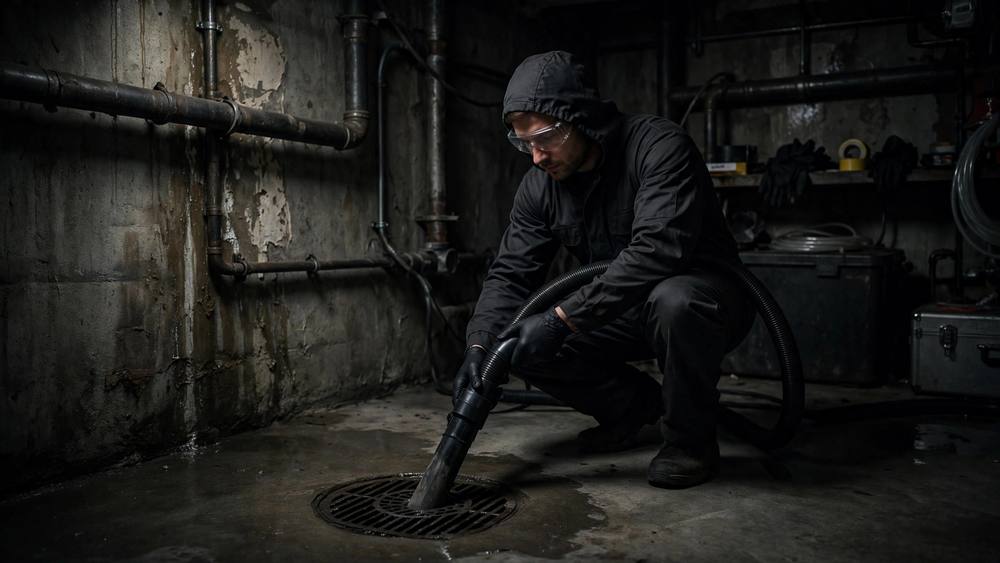
Category 3 water damage — commonly called "black water" — is water that is grossly contaminated with sewage, chemicals, or other hazardous materials. It includes sewage backups, toilet overflows with feces, rising floodwater from rivers and streams, and any standing water that has been sitting long enough to support microbial growth. Unlike a clean supply-line leak, black water is unsafe to handle without professional protective equipment, and every porous material it touches generally must be removed rather than dried.
What Are the Three Categories of Water Damage?
The restoration industry classifies water by contamination level:
- Category 1 — Clean water: broken supply lines, overflowing sinks with no contaminants. Still becomes more dangerous the longer it sits.
- Category 2 — Gray water: dishwasher or washing machine discharge, toilet overflow without feces. Contains chemical or biological contaminants that can cause illness.
- Category 3 — Black water: sewage, rising floodwater, seawater, and any water with gross contamination. Carries bacteria, viruses, and parasites that pose serious health risks.
An important rule: water degrades in category over time. Clean water from a burst pipe that sits for several days in a warm basement can become Category 3 as microbes multiply — which is why fast extraction matters even for "clean" floods.
What Health Risks Does Black Water Pose?
Black water can carry E. coli, salmonella, hepatitis pathogens, tetanus, and various parasites. Exposure happens through skin contact, splashes to eyes and mouth, and inhalation of aerosolized contaminants during cleanup. Children, elderly residents, and anyone with a compromised immune system face the highest risk. This is the core reason professionals treat black water jobs like hazmat scenes: full PPE, containment barriers, and negative air pressure to keep contaminants from spreading through the home.
What Do Professionals Actually Do Differently?
A Category 3 cleanup follows a stricter protocol than a standard drying job:
- Containment of the affected area with plastic barriers and negative air pressure
- Extraction of contaminated water with truck-mounted or portable systems
- Removal of porous materials — carpet, pad, drywall, and insulation touched by black water are discarded, not dried
- HEPA vacuuming and detailed cleaning of all remaining surfaces
- Disinfection with EPA-registered antimicrobial products
- Drying and verification with moisture readings before any rebuild begins
Hard, non-porous surfaces like concrete and tile can often be cleaned and saved. Almost everything soft cannot.
Common Black Water Scenarios in Columbus
In the Columbus area, Category 3 events most often come from sewer backups during heavy summer storms that overwhelm aging sewer laterals — especially in older central neighborhoods with mature tree roots invading clay and cast-iron pipes — and from basement flooding where stormwater mixes with sanitary systems. Sump pump failures during power outages are another frequent trigger. If your basement floodwater smells like sewage or came up through a floor drain, treat it as black water until a professional says otherwise.
What Should You Do (and Not Do) Right Now?
Do: keep people and pets away from the water, shut off electricity to the affected area if you can do so safely, and call for professional help immediately. Do not: wade through it in regular clothes, run your HVAC system (it spreads contaminants), use a household wet-vac, or try to save soaked carpet and pad. Document the damage with photos from a safe distance for your insurance claim. If you rent, notify your landlord or property manager immediately as well, and keep children and pets completely away from the area until professionals declare it safe.
Why Can Black Water Not Just Be Pumped Out and Forgotten?
Pumping removes the water, not the contamination. Sewage soaks into concrete pores, wicks up into wall framing, and saturates every porous material it touches — and pathogens, organic matter, and odor-causing compounds remain long after surfaces look dry. That is why the protocol requires removing contaminated porous materials, HEPA-cleaning and disinfecting everything that remains, and verifying dryness with moisture readings before any rebuild. Skipping these steps leaves a home that looks restored but harbors bacteria, persistent odors, and mold growth behind fresh drywall.
Facing sewage backup or contaminated flooding in Columbus? Do not risk your health trying to handle black water yourself. Call (614) 926-0051 now — we will connect you with a local provider equipped for safe Category 3 cleanup, 24/7.
Need help right now?
One free call connects you with a trusted Columbus provider — 24/7.
Related services
- Category 3 Water Damage Cleanup in Columbus, OH
- Sewage Backup Cleanup in Columbus, OH
- Blackwater Damage Cleanup in Columbus, OH
Back to Columbus water damage restoration or browse all resources.
Keep reading
Common questions
Not always. A clean-water supply-line overflow with no fecal matter is Category 1 or 2, while any overflow involving feces is Category 3. When in doubt, treat it as the higher category — the health consequences of underestimating contamination are serious.
No. Industry standards require removing and discarding carpet, carpet pad, and other porous materials contacted by Category 3 water. They cannot be reliably disinfected, and keeping them creates ongoing health and odor problems. Even professional carpet cleaning cannot reliably disinfect pad and backing after sewage exposure.
Standard policies often exclude sewer backup unless you carry a specific water/sewer backup endorsement. Check your policy now, before you need it — the endorsement is usually inexpensive compared to the cost of a professional black water cleanup. Call your agent to confirm the endorsement exists before an emergency forces the question.
The emergency mitigation phase — extraction, removal of contaminated materials, and disinfection — typically takes one to three days. Full drying, verification, and rebuild add more time depending on how many rooms and materials were affected. Your provider should explain each phase upfront so you know exactly what to expect.