
Burst Pipe in Winter: Columbus Emergency Guide
A burst pipe can release hundreds of gallons per hour. Here's exactly what to do in the first 15 minutes, how restoration works, and how to prevent the next freeze.
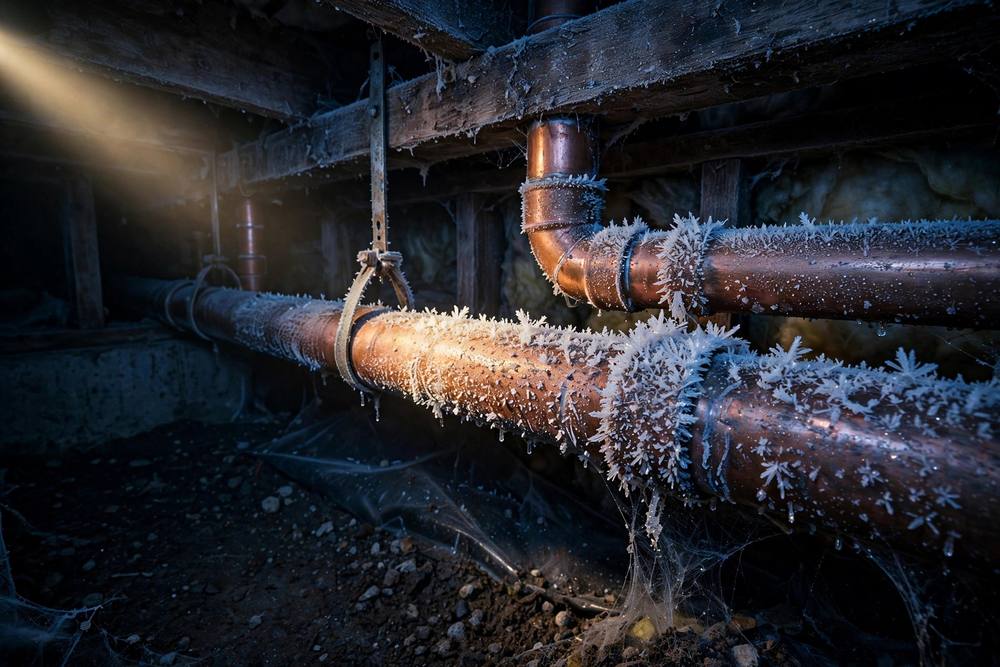
If a pipe bursts in your Columbus home this winter, do this immediately: shut off your main water valve, turn off electricity to affected areas if water is near outlets or panels, open faucets to drain remaining water, and call for emergency water extraction at (614) 926-0051. A single burst pipe can release hundreds of gallons per hour — acting in the first minutes limits the damage to a plumbing repair instead of a full restoration project. Here is the complete emergency playbook, plus how to keep it from happening again.
Why Do Pipes Burst in Columbus Winters?
Columbus winters regularly bring stretches well below freezing, punctuated by extreme cold snaps when polar air drops temperatures into the single digits or lower. Water expands as it freezes, and the pressure spike — not the ice itself — splits copper, PEX, and especially older galvanized pipes. The most vulnerable pipes run through unheated crawl spaces, exterior wall cavities, attics, garages, and vacant or under-heated properties. Student rentals and older central-Columbus homes with minimal insulation are hit hardest, often discovering the burst only when the thaw comes and water starts flowing.
What Are the First 15 Minutes After Discovery?
- Shut off the main water valve immediately. Know where it is before winter — usually in the basement near the water meter or where the line enters the home.
- Kill power to wet areas at the breaker if water is near outlets, switches, or the electrical panel. Never step into standing water where electricity may be live.
- Open cold-water faucets to drain remaining pressure and water from the pipes.
- Move valuables and furniture out of the water's path; block furniture legs up off wet floors.
- Call for emergency extraction — (614) 926-0051 connects you with a local provider 24/7.
- Document everything with photos and video for your insurance claim.
Should You Try to Thaw a Frozen (Not Yet Burst) Pipe?
If you catch a pipe frozen but intact, you may be able to prevent the burst. Open the faucet it supplies, then apply gentle heat — a hair dryer, heating pad, or warm towels — starting from the faucet end and working back toward the frozen section. Never use an open flame, propane torch, or heat gun on high; overheated pipes burst faster and torches start fires. If you cannot locate the frozen section or the pipe has already split, stop and call a plumber.
What Will the Restoration Involve?
After the plumber repairs the pipe itself, restoration addresses what the water did: emergency extraction of standing water, moisture mapping of walls, ceilings, and floors the water reached, removal of soaked drywall and insulation, structural drying with air movers and dehumidifiers over several days, mold prevention treatment, and finally repairs — drywall, paint, flooring, and trim. Burst-pipe jobs are among the most insurance-friendly claims because the cause is sudden and accidental.
How Do You Prevent Burst Pipes Next Winter?
- Insulate vulnerable pipes in crawl spaces, attics, garages, and exterior walls with foam sleeves
- Keep the thermostat at 55°F or higher even when traveling — never turn heat off in winter
- Let faucets drip during extreme cold snaps to relieve pressure
- Open cabinet doors under sinks on exterior walls so warm air reaches the pipes
- Shut off and drain exterior hose bibs before the first freeze
- Seal air leaks where cold air blows directly onto plumbing
- Consider smart leak detectors with automatic shutoff valves — they stop a burst from becoming a flood while you are away
What About Vacant or Rental Properties?
Vacant homes are the highest-risk properties in Columbus winters — no one notices the freeze until the thaw floods the house. If you own a vacant or rental property, either maintain heat all winter or have the plumbing professionally winterized (drained and filled with antifreeze). Property managers should add freeze checks to their winter routines after every cold snap.
What If You Discover the Burst While Away From Home?
Coming home to flooding is disorienting, so keep it simple: shut off the main valve first, photograph everything before moving items, and call for emergency extraction before calling the plumber — stopping the water damage matters more than fixing the pipe in the first hour. Smart leak detectors with automatic shutoff valves exist precisely for this scenario and are worth considering if you travel in winter.
Burst pipe flooding your Columbus home right now? Every minute counts. Call (614) 926-0051 immediately — we will connect you with a local provider for 24/7 emergency water extraction and burst pipe cleanup.
Need help right now?
One free call connects you with a trusted Columbus provider — 24/7.
Related services
- Burst Pipe Water Damage in Columbus, OH
- Frozen Pipe Water Damage in Columbus, OH
- Emergency Water Extraction in Columbus, OH
Back to Columbus water damage specialists or browse all resources.
Keep reading
Common questions
Yes — sudden and accidental burst pipes are one of the most commonly covered water damage claims. Document the damage with photos, keep the plumber's invoice, and notify your insurer promptly. Damage from long-term leaks due to neglect is treated differently, so fast action protects both your home and your claim.
Most often in unheated or poorly insulated spaces: crawl spaces, attics, garages, exterior wall cavities, and basements near foundation walls. Pipes on exterior walls under kitchen sinks are a classic burst location during Columbus cold snaps. Insulating these runs and keeping cabinet doors open during cold snaps targets the highest-risk spots.
PEX is more freeze-tolerant because it can expand slightly, but it is not freeze-proof — fittings can still fail and extreme cold can split it. Copper is rigid and splits readily under ice pressure. No common residential pipe material survives a hard freeze indefinitely.
At minimum, know where your main shutoff valve is and confirm it actually turns (valves seize with age). Keep the number of a plumber and a water damage provider saved in your phone. Consider a smart leak detector with automatic shutoff for protection while you travel.