
Water Damage Restoration Process: Step by Step
From emergency inspection to final repairs — here's the complete professional water damage restoration process, what each step does, and how long it takes.
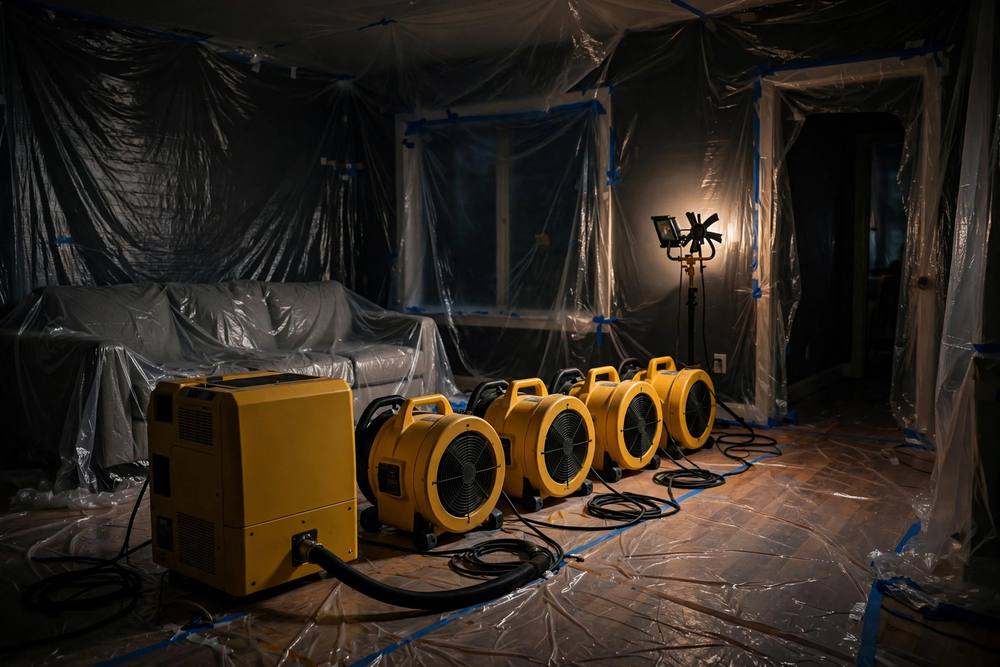
Water damage restoration follows a standard professional process: emergency contact and inspection, water extraction, structural drying and dehumidification, cleaning and sanitizing, and finally restoration and repairs. The sequence matters — skipping straight to repairs over wet materials guarantees mold and callbacks. Whether you are dealing with a burst pipe in a Columbus basement or a flooded commercial space, here is exactly what happens at each stage and why.
Step 1: Emergency Contact and Inspection
It starts with your call. The provider asks what happened, whether the water source is stopped, and whether there are safety hazards like sewage or electrical risks — then dispatches a crew. On arrival, technicians perform a detailed inspection and assessment: identifying the water category (clean, gray, or black), mapping moisture with meters and thermal imaging, and documenting everything with photos. You receive a scope of work explaining what will be done and why. This assessment also determines whether the situation is an emergency requiring immediate extraction or can be scheduled.
Step 2: Water Extraction
Standing water is removed as fast as possible using truck-mounted extractors, submersible pumps, and portable extraction units. Speed here directly controls the total damage: every hour of standing water means deeper penetration into subfloors, wall cavities, and framing. In Columbus basement floods — the most common residential scenario — this often means pumping thousands of gallons before drying can even begin. Furniture and belongings are moved or blocked up off wet surfaces during this phase.
Step 3: Drying and Dehumidification
Once bulk water is gone, the real science starts. Technicians position air movers to create airflow across wet surfaces and commercial dehumidifiers to pull moisture from the air, preventing it from reabsorbing into materials. Daily moisture readings track progress in walls, floors, and framing against established dry standards. This phase typically runs three to five days for standard residential jobs, longer for severe saturation. Equipment is adjusted — not just left running — based on the readings.
Step 4: Cleaning and Sanitizing
All restorable surfaces are cleaned, and antimicrobial treatments are applied to prevent mold growth. This step is especially critical for gray and black water events, where disinfection is mandatory rather than optional. Odor treatment, air scrubbing with HEPA filtration, and thorough cleaning of affected areas happen here. Personal belongings that were packed out are cleaned off-site and returned after the structure is verified dry.
Step 5: Restoration and Repairs
The final phase returns your property to pre-loss condition — or better. Minor jobs may need only drywall patches and paint; major ones involve replacing drywall, insulation, flooring, cabinets, and trim. This is also when the rebuild timeline extends: drying takes days, but reconstruction can take weeks depending on material availability and scope. A full-service provider manages both phases so you are not left coordinating separate contractors.
How Long Does the Whole Process Take?
Mitigation (extraction through drying) for a typical single-room residential job runs three to seven days. Add mold remediation or multi-room damage and it stretches to one to three weeks. Full reconstruction adds more time on top. The single biggest factor you control is how fast you call — Columbus homeowners who call within hours instead of days consistently see smaller scopes, shorter timelines, and fewer mold complications.
What Should You Do While the Crew Works?
Stay out of active work areas, keep children and pets away from equipment, do not turn off or move drying equipment (it is positioned and calibrated deliberately), and keep all documentation the crew provides. Ask for a single point of contact so updates do not get lost between shifts. If you have filed an insurance claim, forward the provider's photos, moisture logs, and scope to your adjuster promptly — thorough documentation is what gets claims approved smoothly.
What Can Delay the Timeline?
Insurance adjuster scheduling, discovery of hidden mold mid-project, backordered flooring or cabinets, and contractor availability during widespread storm events all extend timelines. Clear communication prevents most frustration: a good provider tells you upfront which phases depend on third parties and updates you when anything shifts.
Dealing with water damage in Columbus right now? Knowing the process helps, but fast action matters more. Call (614) 926-0051 — we will connect you with a local provider who will walk you through every step, starting today.
Need help right now?
One free call connects you with a trusted Columbus provider — 24/7.
Related services
- Water Damage Restoration in Columbus, OH
- Water Damage Mitigation in Columbus, OH
- Structural Drying Services in Columbus, OH
Back to trusted water damage help in Columbus or browse all resources.
Keep reading
Common questions
For most single-room residential jobs, three to seven days covers extraction and drying. Multi-room damage, mold remediation, or major reconstruction extends the timeline to several weeks. Calling within hours rather than days is the biggest factor in keeping the timeline short.
For minor, clean-water spills caught immediately, careful DIY drying can work. For anything involving wall cavities, subfloors, sewage, or suspected mold, professional equipment and moisture verification make the difference between actually dry and looks dry — and looks dry is how mold problems start.
Most policies require you to mitigate — meaning you must take reasonable steps to prevent further damage, like shutting off water and calling for extraction. Document everything with photos and receipts, notify your insurer promptly, and keep the provider's moisture logs and scope for your adjuster.
A reputable provider shows you moisture meter readings, explains the drying plan in plain language, documents everything with photos, communicates daily, and never pressures you into signing anything on the spot. Vague answers and demands for large upfront payments are red flags.