
How Long Does It Take to Dry a Flooded Basement?
Most flooded basements need 3 to 5 days of professional drying after extraction, but several factors can change that. Here is what really controls the timeline.
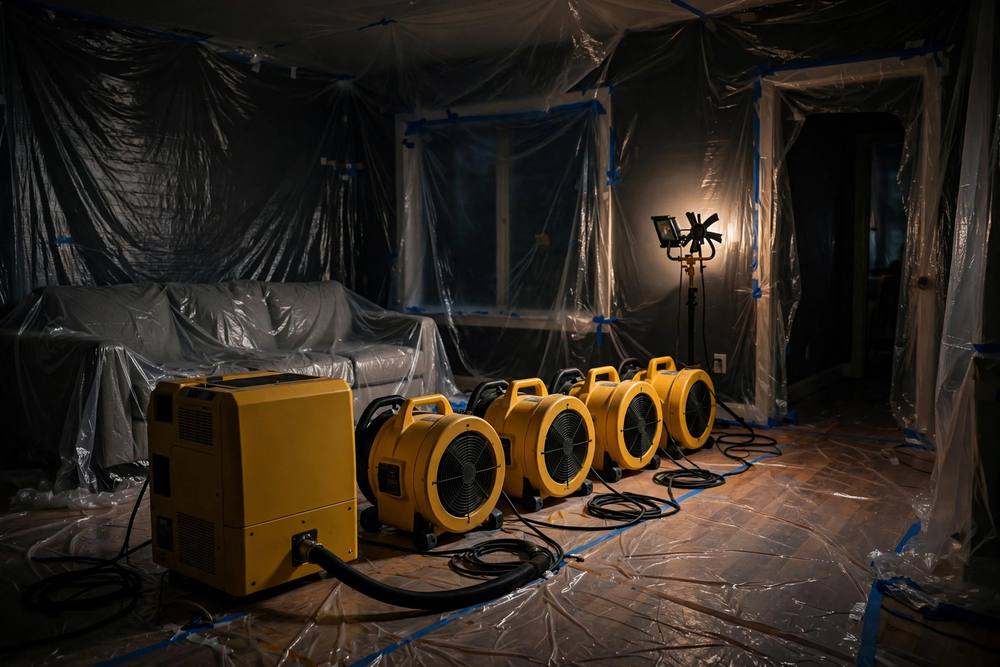
The direct answer: in many cases, a flooded basement takes about 3 to 5 days of active professional drying after the standing water is removed, but the real timeline depends on how much water there was, what got wet, and how quickly drying started. Some jobs finish sooner; larger or delayed jobs can take a week or more. Here is what actually determines the timeline. Below you will find a realistic day-by-day outline of professional drying, the factors that stretch or shrink the timeline, why rushing the process backfires, and how to tell with confidence when the job is truly done. Understanding the process also helps you hold your provider accountable for a complete job.
What Does the Drying Timeline Look Like?
A typical professional dry-out follows this sequence. Day 0: emergency water extraction removes standing water, often the same day you call. Days 1 to 3: commercial dehumidifiers and high-velocity air movers run continuously while technicians monitor moisture levels in walls, floors, and framing daily. Days 3 to 5: moisture readings are checked against dry standards; equipment is removed in stages as areas reach their targets. After drying: any necessary demolition of unsalvageable materials, followed by repairs and reconstruction, which is a separate phase with its own timeline.
What Affects How Long Drying Takes?
- Volume of water and how long it sat. Water extracted within hours dries far faster than water discovered days later after soaking deep into materials.
- Materials involved. Concrete and tile release moisture quickly. Hardwood, subflooring, drywall, and insulation hold water longer and may need removal instead of drying.
- Whether water got inside walls and cavities. Hidden moisture behind walls or under floors extends the job because it dries slowly and must be verified with meters.
- Humidity and temperature. Warm, dry air dries structures fastest. Columbus summer humidity can slow the process, which is why sealed professional drying with dehumidification outperforms open windows and fans.
- Size of the affected area. More square footage means more equipment and more monitoring points.
Why Can't I Just Let It Air Dry?
Surface dryness is deceptive. A basement floor can feel dry while the subfloor, wall cavities, and framing behind it remain wet enough to grow mold. Household fans move air but do not dehumidify, and in humid weather they can simply circulate damp air. Professional drying uses measured science: technicians track moisture content in materials against established dry standards and do not declare the job done until readings confirm it. Skipping this verification is how hidden mold problems start weeks later.
How Do Professionals Dry a Basement?
After extraction, crews place commercial dehumidifiers to pull moisture from the air and high-velocity air movers to push dry air across wet surfaces, creating rapid evaporation. They may remove baseboards, drill small weep holes, or open wall cavities to reach trapped moisture. Moisture meters and thermal imaging verify progress daily. When readings hit the dry standard for each material, equipment comes out. This monitored approach is faster and far more reliable than passive drying.
How Do I Know It's Fully Dry?
Ask for moisture readings, not just a visual check. Professionals compare current readings to the dry standard for unaffected materials in your home. If a provider cannot show you meter readings or explain their drying targets, that is a red flag. Proper documentation also protects you with your insurance company.
What Happens If Drying Is Rushed or Skipped?
Cutting the drying phase short has predictable and expensive consequences. Trapped moisture feeds mold colonies inside walls within days, producing musty odors that surface weeks after everything looked fine. Wood framing and subflooring can warp, swell, or weaken over time when left damp. Paint and finishes applied over moist drywall bubble and peel. Insurance adjusters may question or reduce claims when professional drying was never performed or documented. And the eventual fix, opening up finished walls to remediate hidden mold, costs far more than the extra day or two of drying would have. Patience during the drying phase is genuinely the cheapest part of the entire restoration project.
Flooded basement in Columbus, OH? Fast professional drying prevents mold and limits repair costs. Water Damage Columbus connects you with local providers offering 24/7 emergency extraction and structural drying. Call (614) 926-0051 now.
Need help right now?
One free call connects you with a trusted Columbus provider — 24/7.
Related services
- Structural Drying Services in Columbus, OH
- Basement Water Removal in Columbus, OH
- Post-Flood Structural Drying in Columbus, OH
Back to Columbus water damage restoration or browse all resources.
Keep reading
Common questions
In many cases the drying phase itself runs 3 to 5 days, but larger areas, water trapped inside walls, saturated hardwood or insulation, and delayed response can extend it to a week or more. Reconstruction after drying is a separate phase with its own additional timeline on top of that.
Not necessarily. Equipment must be sized to the job: too little extends drying time while too much wastes energy without helping. Professionals calculate the required dehumidification capacity based on the volume of the affected space and the moisture load, then verify progress with meters.
Yes, especially in summer. High outdoor humidity slows evaporation from wet materials, which is why open windows and household fans often fail here. Professional drying seals the space and uses commercial dehumidification to control indoor humidity regardless of weather, a key advantage over DIY approaches.
When moisture meter readings in affected materials match the dry standard for unaffected materials in your home. Reputable providers document these readings and share them with you and your insurer, rather than relying on touch or appearance alone. Ask to see the actual meter readings and the targets before any equipment is removed.