
Water Damage Behind Walls: Detection & Fix Guide
Musty odors, peeling paint, and warped baseboards can signal water trapped inside your walls. Here's how to detect it and what fixing it actually involves.
Water damage behind walls is fixed by first stopping the water source, then drying the wall cavity, removing materials that cannot be saved (such as soaked drywall and insulation), treating any mold growth, and rebuilding the wall. The hardest part is detection: by the time you see a stain, water may have been traveling inside the wall for weeks. Acting quickly once you notice the signs is what separates a minor repair from a major mold and framing problem.
What Are the Signs of Water Damage Behind Walls?
Because the damage is hidden, you have to read the secondary clues. Watch for these warning signs, especially after storms, freezes, or plumbing work:
- Musty or earthy odors that do not go away with cleaning, particularly near bathrooms, kitchens, or exterior walls
- Discoloration or yellow-brown staining spreading across drywall or ceilings
- Peeling, bubbling, or flaking paint and wallpaper pulling away from the wall
- Warped baseboards or trim pulling away from the wall surface
- Soft or spongy drywall that gives slightly when pressed
- Visible mold spots along baseboards, in corners, or behind furniture
- An unexplained jump in your water bill, which often means a supply line is leaking inside a wall
In Columbus, these signs show up most often in older homes with plaster walls and in exterior walls after freeze-thaw cycles, when pipes in wall cavities freeze and crack.
How Do Professionals Detect Hidden Water Damage?
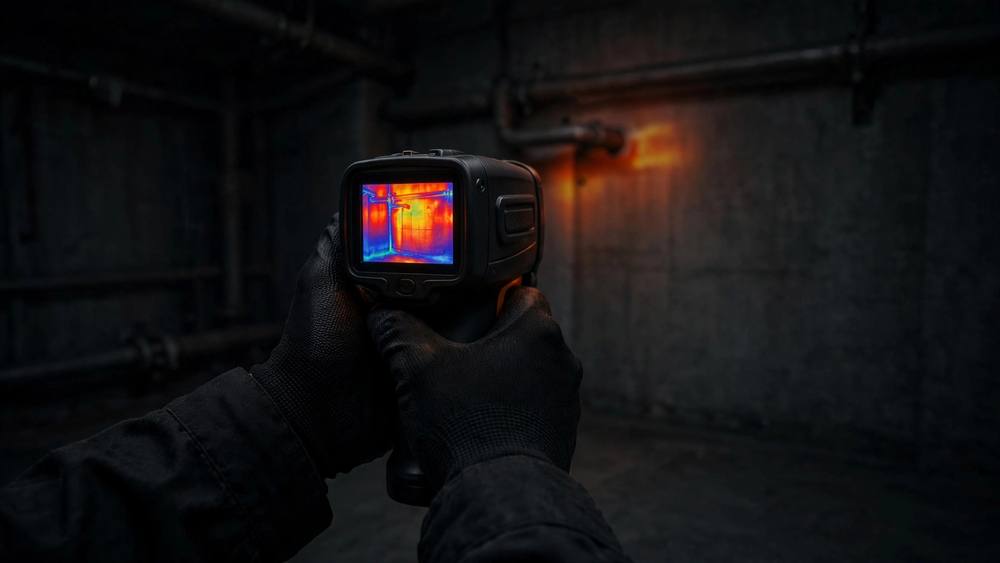
Restoration professionals do not guess — they measure. Pin and pinless moisture meters read moisture content through drywall and wood without major demolition. Thermal imaging cameras detect the slight temperature differences caused by evaporation, revealing cold, damp areas inside walls that look perfectly dry on the surface. Moisture mapping then documents exactly how far the water traveled, which matters both for the drying plan and for insurance documentation.
This matters because water rarely stays where it entered. A leaking supply line on an upper floor can run down inside a wall and pool behind baseboards two rooms away. Without proper detection, repairs miss the real damage zone and mold returns within months.
What Causes Water Damage Inside Walls?
- Burst or frozen pipes — Columbus winters regularly drop well below freezing, and pipes in exterior wall cavities are the first to freeze
- Slow plumbing leaks from supply lines, drain fittings, or shower valves that drip for months unnoticed
- Roof leaks that travel down wall cavities far from the actual roof penetration
- Failed window and door flashing letting wind-driven rain into the wall assembly
- Foundation seepage wicking upward into lower wall sections, common with central Ohio's heavy clay soil
- Condensation inside walls where warm indoor air meets cold exterior sheathing
How Is Water Damage Behind Walls Fixed?
Step 1: Stop the water source
Nothing else matters until the leak is stopped — a plumber or roofer addresses the source while the restoration team handles the damage.
Step 2: Map the moisture
Technicians use meters and thermal imaging to define the full affected area, including wall cavities, insulation, and framing.
Step 3: Controlled removal
Wet drywall is typically cut out (often 12 to 24 inches above the visible damage line), and saturated insulation is removed because it cannot be dried in place reliably.
Step 4: Structural drying
Air movers and dehumidifiers dry the exposed framing and wall cavity over several days, with daily moisture readings to verify progress.
Step 5: Mold treatment
Any mold on framing is remediated, and antimicrobial treatments are applied to prevent regrowth.
Step 6: Rebuild
New insulation, drywall, texture, and paint restore the wall — the final step many homeowners forget to budget for.
Can You Just Dry the Wall Without Opening It?
Sometimes. Specialized wall-cavity drying systems can inject dry air behind walls through small holes, which works for clean-water events caught early. But once drywall has swollen, insulation is saturated, or mold is present, there is no shortcut — the wet materials must come out. A reputable provider will show you moisture readings rather than asking you to take their word for it.
How Long Does the Repair Take?
A single contained wall section typically takes three to seven days for drying plus rebuild time. Widespread damage across multiple rooms, mold remediation, or waiting on insurance approvals extends the timeline. The biggest delay homeowners face is waiting too long to call — every week of hidden moisture increases the demolition and mold scope.
Suspect water behind your walls in the Columbus area? The sooner moisture is mapped, the smaller the repair. Call (614) 926-0051 now and we will connect you with a local provider for inspection, detection, and full repair — available 24/7.
Need help right now?
One free call connects you with a trusted Columbus provider — 24/7.
Related services
- Hidden Water Leak Detection in Columbus, OH
- Thermal Imaging Leak Detection in Columbus, OH
- Water-Damaged Wall Repair in Columbus, OH
Back to trusted water damage help in Columbus or browse all resources.
Keep reading
Common questions
Persistent musty odors, allergy symptoms that worsen at home, and staining or warping near baseboards are strong indicators. Professionals confirm it with moisture meters and thermal imaging, and sometimes a small inspection hole or borescope camera, before recommending any demolition.
It depends on the cause. Sudden events like a burst pipe are typically covered, while long-term seepage or maintenance issues often are not. Document everything with photos and moisture readings, and review your policy's water damage exclusions before filing. Keep records of when you first noticed the problem, since insurers distinguish sudden events from long-term neglect.
The common rule is to remove drywall at least 12 inches above the highest moisture reading or visible damage line, since water wicks upward. Saturated insulation behind it is removed as well. Moisture mapping determines the exact cut lines. If mold is present, removal extends until clean, dry material is reached on all sides.
Surface drying may occur, but trapped moisture inside the cavity and insulation usually does not dry adequately on its own. That lingering dampness is exactly what causes mold growth and wood rot months later, which is why professional drying and verification matter.