
How to Choose a Water Damage Company in Columbus
Not all restoration providers are equal. Here's how to evaluate response time, process, and professionalism before you hand over your keys.
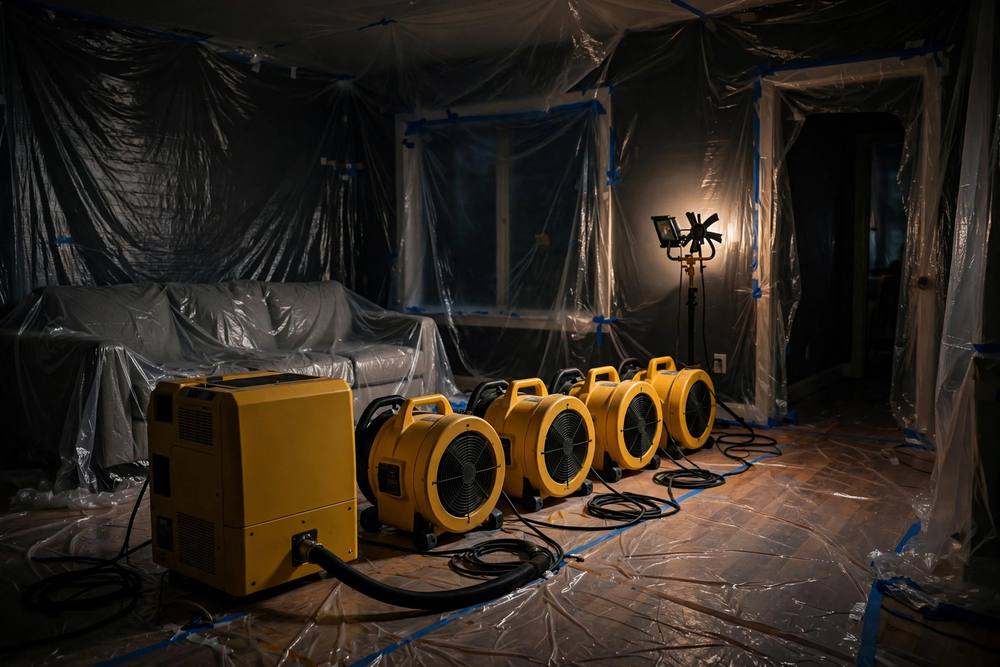
The right water damage restoration company in Columbus offers 24/7 live emergency response, a clear step-by-step process they can explain in plain language, professional drying equipment with documented moisture readings, and thorough documentation for your insurance claim. Because water damage gets worse by the hour, the best choice is usually the qualified local provider who can get there fastest — not the one with the flashiest ads. Below is exactly how to evaluate your options when every minute counts.
Why Does Response Time Matter So Much?
Mold can begin growing on wet drywall and wood within 24 to 48 hours. Standing water continues wicking into framing, subfloors, and wall cavities the entire time it sits. In Columbus, where many homes have basements and heavy clay soil slows drainage, a flooded basement left overnight becomes a significantly bigger job by morning. Ask any provider you consider: how fast can a crew actually be at my door? A company that answers around the clock and dispatches immediately is worth more than one with a nicer website.
What Questions Should You Ask Before Hiring?
- Are you available 24/7 for emergencies? Water damage does not wait for business hours.
- What is your process? They should describe inspection, extraction, drying, monitoring, and repairs without hesitation.
- How do you verify things are dry? Look for moisture meters and documented daily readings, not just "we'll run fans for a few days."
- Will you document everything for insurance? Photos, moisture logs, and itemized scopes matter enormously at claim time.
- Who will actually do the work? Understand whether you are dealing with the company itself or subcontractors.
- How do you handle mold if you find it? Water jobs frequently uncover mold; the provider should have a clear protocol.
What Are the Red Flags?
Be cautious of any provider that demands large upfront payments before work begins, refuses to explain their drying process, cannot show you moisture readings, pressures you to sign over insurance benefits on the spot, or has no verifiable local presence in the Columbus area. Storm-chasing outfits that flood into town after major weather events and vanish weeks later are a recurring problem in this industry — a local provider you can find again next month is always the safer bet.
Should You Call Your Insurance Company First?
For major damage, it is smart to notify your insurer promptly, but you do not need to wait for an adjuster before stopping the damage. Mitigation — shutting off water, extracting standing water, starting drying — is both expected by insurers and required by most policies under your duty to prevent further loss. Document everything with photos and keep all receipts. A good restoration provider coordinates with your adjuster and speaks the language of claims.
How Does a Referral Service Fit In?
When you are standing in water at 2 a.m., researching five companies is not realistic. A referral service like Water Damage Columbus exists for exactly that moment: one call connects you with a local provider in our network that handles your type of damage. You still get to ask your questions and approve the plan — the service simply shortens the frantic search when time matters most.
What About Cost Estimates?
Reputable providers inspect before quoting because legitimate costs depend on the water category, square footage affected, materials involved, and whether mold or structural repairs are needed. Be skeptical of firm prices quoted sight-unseen over the phone. What you can reasonably expect is a written scope of work, line-item pricing, and clear communication about what insurance may cover versus what is out of pocket.
What Should You Expect on the First Visit?
A professional first visit follows a predictable pattern. The technician walks the property with you, takes moisture readings in affected and nearby areas, photographs everything, and explains what they found in plain language — including what can be dried in place and what must be removed. You should receive a written scope of work, an estimated timeline, and clear next steps for insurance documentation. If a provider will not show you readings or puts nothing in writing, treat that as a warning sign and keep looking.
Need a water damage provider in Columbus right now? Skip the search and the stress. Call (614) 926-0051 — we will connect you with a local provider in our network 24/7, starting with fast emergency response and a clear explanation of what happens next.
Need help right now?
One free call connects you with a trusted Columbus provider — 24/7.
Related services
- Water Damage Restoration in Columbus, OH
- Water Damage Assessment in Columbus, OH
- Water Damage Inspection in Columbus, OH
Back to Columbus water damage specialists or browse all resources.
Keep reading
Common questions
For active flooding or sewage backups, aim for a provider that can dispatch within the hour and arrive the same day. Every hour of standing water increases drying time, demolition scope, and mold risk, so response speed is one of the most important selection criteria.
In a true emergency, waiting days for multiple bids usually costs more in additional damage than it saves. Get one qualified provider started on mitigation immediately; you can still compare scopes and pricing for the repair and rebuild phase afterward.
The most recognized credential in the industry is IICRC certification for water damage restoration and applied structural drying. Ask which technicians on your job hold current certifications rather than just whether the company name appears on a list. Technicians with these credentials follow standardized drying procedures rather than improvising.
Yes — experienced providers do this routinely. They document damage with photos and moisture readings, prepare detailed scopes using industry-standard estimating, and communicate directly with adjusters, which typically speeds up claim approval. Ask whether they use industry-standard estimating formats, which adjusters process faster.