
Post-Flood Sanitization: Why Disinfection Matters
Drying a flooded home isn't enough — floodwater leaves behind bacteria, sewage, and chemicals that require professional-grade sanitization. Here's why it matters.
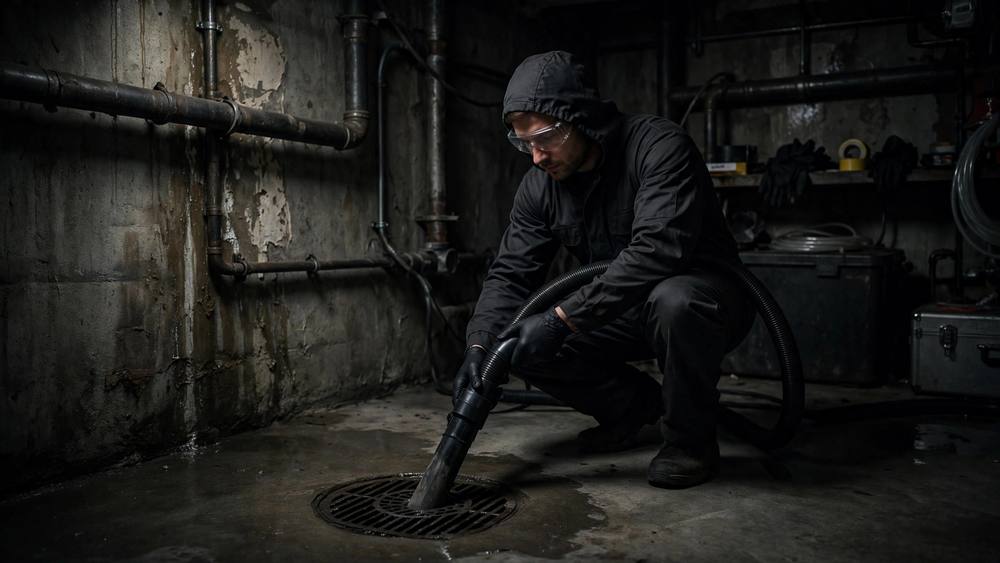
Short answer: floodwater is never just water. It carries sewage, bacteria, chemicals, and debris that soak into porous materials and linger long after surfaces look dry. Professional sanitization — using EPA-registered antimicrobials, HEPA filtration, and proper removal of unsalvageable materials — is what makes a flooded home safe to live in again, not just dry.
After a flood, most homeowners focus on the visible problem: standing water. But the invisible problem — contamination — is what causes lingering odors, illness risks, and mold outbreaks weeks later. Understanding the difference between drying and sanitizing protects both your health and your home's value.
What's actually in floodwater?
Restoration professionals treat intruding floodwater as at least Category 2 (gray water) and usually Category 3 (black water) — the most contaminated classification. Depending on the source, it can contain:
- Sewage and bacteria from overwhelmed sewers and septic systems — including E. coli and other pathogens
- Chemicals from garages, lawns, roadways, and household products swept up in the flow
- Fuel, oil, and pesticides carried in from streets and soil
- Debris and sediment that grind contaminants deep into porous surfaces
In Columbus, flash flooding from overwhelmed storm drains frequently mixes with sanitary sewer overflow — which is why professionals assume contamination even when the water looks relatively clear.
Why isn't drying enough after a flood?
Drying removes moisture; it does not remove contamination. Bacteria and pathogens can survive on "dry" surfaces, and organic contaminants embedded in porous materials become food for mold. A basement that was pumped out and dried with fans may look fine while harboring sewage bacteria in the concrete pores and mold colonies forming inside damp wall cavities. Proper post-flood work follows a sequence: extract, remove unsalvageable materials, clean, sanitize with appropriate agents, and then dry — in that order. Skipping the sanitization step is how homes develop the mysterious musty smell that never quite goes away.
What does professional sanitization involve?
Local providers we connect you with tailor the process to the contamination level, but it generally includes:
- Removal of unsalvageable porous materials — carpet pad, soaked insulation, drywall below the waterline, and upholstered items exposed to black water are removed, not cleaned.
- HEPA-filtered air scrubbing to capture airborne contaminants and mold spores stirred up during demolition.
- Thorough cleaning of salvageable hard surfaces to remove silt, debris, and organic matter — disinfectants cannot work through a layer of grime.
- Application of EPA-registered antimicrobial and disinfectant products to structural surfaces, following proper dwell times.
- Deodorization to neutralize odors at the source rather than masking them.
- Moisture verification with meters to confirm the structure is dry enough to rebuild safely.
Which materials can be sanitized and which must go?
Non-porous materials — concrete, metal, glass, hard plastics, solid wood framing — can typically be cleaned and sanitized successfully. Porous materials exposed to contaminated floodwater — carpet pad, upholstery, mattresses, pillows, particleboard, and soaked drywall and insulation — generally must be removed and discarded. This is not professionals upselling you; it is the industry standard, because contaminants penetrate porous materials beyond the reach of any cleaning process. Trying to save them is how contamination problems persist.
How does sanitization protect against mold?
Mold needs three things: moisture, food (organic material), and time. Floodwater delivers all three in abundance. Sanitization attacks two of them: antimicrobial treatments suppress microbial growth on cleaned surfaces, and the removal of contaminated porous materials eliminates the food source. Combined with rapid structural drying that removes the moisture, this three-pronged approach is what keeps a post-flood home from becoming a mold remediation project a month later — a pattern restoration professionals in humid Columbus summers see far too often when sanitization is skipped.
When is it safe to move back in?
A flooded home is ready for reoccupancy when all standing water and contaminated materials are removed, affected areas are cleaned and sanitized, moisture readings confirm the structure is dry, electrical and HVAC systems are inspected and cleared, and there are no lingering sewage odors. For significant floods, a professional clearance — sometimes including air quality or surface testing — provides documented assurance. Do not rush this step, especially with children, elderly family members, or anyone with respiratory conditions in the household.
If floodwater has entered your Columbus home, proper sanitization is not optional — it is what makes the home safe again. Call (614) 926-0051 for 24/7 emergency flood cleanup with full sanitization and structural drying.
Need help right now?
One free call connects you with a trusted Columbus provider — 24/7.
Related services
- Professional Property Sanitization in Columbus, OH
- Flood-Affected Property Sanitization in Columbus, OH
- Water Damage Disinfection Services in Columbus, OH
Back to Columbus water damage restoration or browse all resources.
Keep reading
Common questions
For very minor clean-water incidents, careful DIY cleaning with proper protective gear can suffice. But floodwater involving sewage, storm drain overflow, or unknown sources requires professional-grade products, HEPA air filtration, and often removal of contaminated materials. Without moisture meters, you also cannot verify the structure is truly dry — the most common DIY failure.
Bleach has limitations: it does not work well on porous materials, it is inactivated by organic matter (meaning surfaces must be thoroughly cleaned first), it can damage some materials, and it does nothing about moisture trapped inside walls. Professionals use EPA-registered antimicrobials formulated for restoration work, applied after proper cleaning with correct dwell times.
It depends on the extent of flooding and contamination. A single-room clean-water incident might be sanitized in a day as part of the overall drying process. Whole-home flood sanitization involving material removal, HEPA scrubbing, antimicrobial application, and verification typically runs several days alongside structural drying, which itself takes three to five days or more.
At minimum: waterproof boots, heavy-duty gloves, eye protection, and an N95 respirator — floodwater can carry sewage pathogens and stir up mold spores. Keep children and pets away entirely, wash thoroughly after any contact, and never enter standing water in a basement until the electricity is confirmed off.