
How Humidity Causes Mold in Ohio Basements
Warm humid air plus cool concrete equals condensation — and mold. Here's why Ohio basements are so vulnerable and the system that keeps them dry for good.
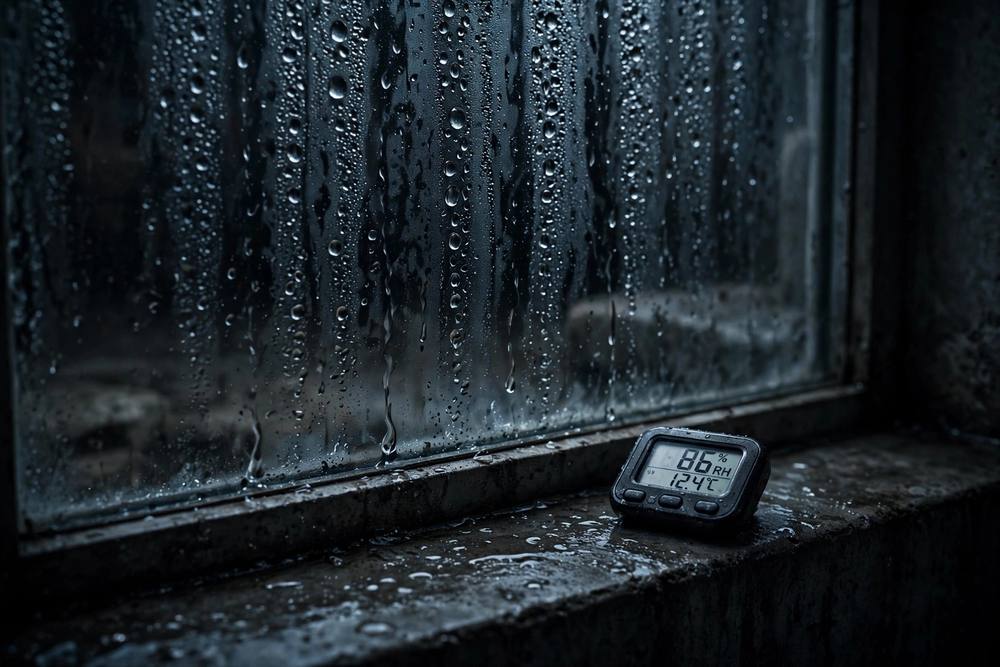
Ohio basement humidity causes mold because warm, humid summer air meets cool foundation walls and floors, creating condensation — liquid water that mold colonies feed on for months. Add central Ohio's heavy clay soil holding moisture against foundations, minor seepage after storms, and poor basement ventilation, and you have the region's most reliable mold factory. The good news: basement mold is a moisture problem first, and moisture can be controlled. Here is the full picture.
Why Are Ohio Basements So Prone to Mold?
Several regional factors converge in a typical Columbus basement:
- Humid summers: outdoor air regularly carries high moisture from June through September
- Cool foundation surfaces: below-grade concrete stays cool year-round, so humid air condenses on contact — just like a cold glass sweating on a summer day
- Clay soil: central Ohio's dense glacial clay drains poorly and holds water against foundation walls, feeding chronic dampness and seepage
- Stack effect: warm air rising through the house pulls replacement air upward from the basement, spreading basement mold spores throughout the home
- Finished basements: drywall and carpet over concrete trap moisture out of sight, hiding growth for years
What Humidity Level Causes Mold Growth?
Mold generally needs sustained relative humidity above 60 percent on surfaces to thrive, and dust, drywall paper, and wood provide all the food it needs. The EPA recommends keeping indoor humidity between 30 and 50 percent. Many Columbus basements sit at 65 to 75 percent all summer without anyone noticing — there is no puddle, no leak, just invisible damp air doing quiet damage. A $15 hygrometer on the basement wall is the cheapest early-warning system you can own.
What Are the Signs of Humidity-Driven Basement Mold?
- Persistent musty odor, strongest in summer, weaker in winter
- Condensation on pipes, ductwork, windows, or foundation walls
- Efflorescence — white mineral deposits on concrete indicating moisture migration
- Discoloration on the bottom edges of drywall or paneling
- Warping or cupping of stored items, cardboard boxes, or wood shelving
- Allergy symptoms that improve when you leave the house
How Do You Control Basement Humidity?
Effective control works from outside in:
- Exterior first: clean gutters, extend downspouts at least six feet from the foundation, and grade soil away from the house — most basement moisture starts as roof water
- Dehumidification: a properly sized basement dehumidifier (ideally with a drain hose, not a bucket you will forget) holding humidity under 50 percent
- Air sealing: seal rim joists and penetrations where humid outside air infiltrates
- Ventilation wisdom: do not ventilate a damp basement with humid summer air — open windows often make it worse
- Storage habits: keep belongings off concrete floors and away from walls; use plastic bins instead of cardboard
What If Mold Is Already Growing?
Surface mold on concrete from condensation can sometimes be cleaned, but mold inside drywall, insulation, or framing requires professional remediation — the materials must be removed, not just wiped. Critically, remediation without fixing the moisture source guarantees recurrence. Any honest provider addresses humidity control and drainage as part of the job, not as an afterthought. If your basement floods in addition to staying humid, the seepage source needs professional waterproofing assessment.
Does a Dehumidifier Alone Solve It?
A good dehumidifier is the single most effective tool, but it cannot overcome active water entry. If water runs across your basement floor during storms, you have a drainage problem that needs waterproofing — the dehumidifier handles the residual humidity afterward. Think of it as a system: exterior water management plus interior humidity control, and mold loses its foothold permanently.
What Is the Stack Effect — and Why Does It Matter?
Warm air naturally rises through your home and escapes through the attic, which pulls replacement air upward from the lowest point — your basement. This "stack effect" means basement air, including mold spores and musty odors, continuously migrates into your living spaces. It is why a moldy basement affects the whole house, not just the basement, and why sealing air leaks between basement and upstairs plus controlling basement humidity improves air quality everywhere.
Fighting basement humidity or mold in Columbus? Do not let another humid summer feed the problem. Call (614) 926-0051 and we will connect you with a local provider for moisture control, dehumidification, and mold remediation.
Need help right now?
One free call connects you with a trusted Columbus provider — 24/7.
Related services
- Basement Moisture Control in Columbus, OH
- Dehumidification Services in Columbus, OH
- Mold Removal in Columbus, OH
Back to Columbus water damage restoration or browse all resources.
Keep reading
Common questions
Keep it between 30 and 50 percent relative humidity, per EPA guidance. Mold risk climbs sharply above 60 percent sustained. A simple hygrometer on the basement wall tells you where you stand — many Columbus basements sit at 65 to 75 percent all summer.
For summer humidity control, yes — run it continuously from late spring through early fall with a drain hose so it never shuts off on a full bucket. In winter, Ohio air is dry enough that most basements do not need it. An undersized unit running constantly is a sign you need more capacity.
Sometimes, temporarily. But if musty odors persist, humidity stays high despite the dehumidifier, or you see efflorescence and discoloration, the moisture source exceeds what interior measures handle. A waterproofing assessment identifies whether exterior drainage or interior systems are needed. Start with gutters, grading, and a quality dehumidifier — these solve a surprising number of cases on their own.
Finished basements hide mold behind drywall and under carpet, often for years, while stack effect carries spores upstairs. If your finished basement smells musty, assume hidden growth until a professional inspection with moisture meters proves otherwise — cosmetic freshness means nothing.