
Hardwood Floors After Flooding: Can They Be Saved?
Cupping, crowning, buckling — flooded hardwood shows clear distress signals. Here's when quick professional drying can save your floors and when replacement is smarter.
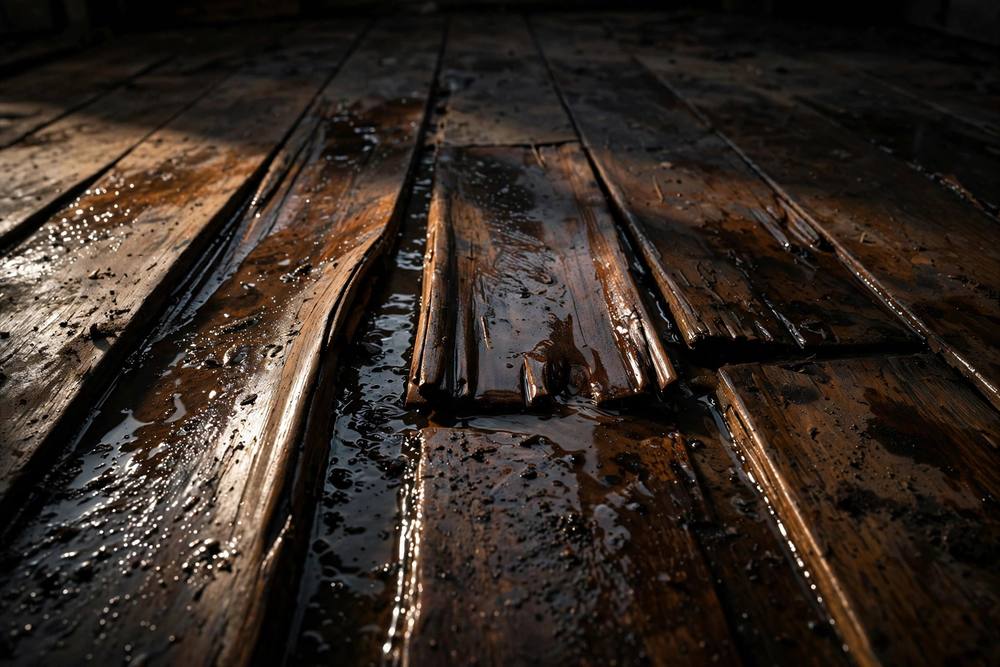
Sometimes yes — solid hardwood floors can often be saved if professional drying starts within 24 to 48 hours, before cupping turns into buckling and the boards' structure breaks down. The honest answer depends on the wood type, how long it stayed wet, whether the water was clean or contaminated, and how severe the distortion has become. Here is how restoration professionals make the save-or-replace call, and what your options look like at each stage.
Why Does Water Damage Hardwood Floors?
Wood is hygroscopic — it absorbs moisture from its surroundings and releases it as conditions change. When floodwater sits on hardwood, the boards absorb water unevenly: the tops and edges swell while the bottoms stay drier. This uneven swelling causes cupping (edges higher than centers), and as drying happens too fast or unevenly, crowning (center higher than edges). Severe or prolonged saturation causes buckling, where boards pull away from the subfloor entirely. Each stage is progressively harder to reverse.
Which Floors Can Be Saved — and Which Cannot?
- Solid hardwood, cupping only, dried quickly: the best candidate — often flattens back with controlled drying and light refinishing
- Solid hardwood with minor buckling: sometimes salvageable by removing a few boards to relieve pressure, then drying and reinstallation
- Engineered hardwood: depends on the wear layer and adhesive — top-quality products sometimes survive, but delamination between layers is usually fatal
- Laminate and luxury vinyl plank: almost never salvageable after significant flooding; the core materials swell irreversibly
- Any flooring soaked by sewage or floodwater: contamination, not just moisture, decides it — porous wood exposed to Category 3 water must be removed
What Does Professional Hardwood Drying Involve?
It is far more controlled than pointing fans at the floor. Technicians first extract standing water, then set up specialized floor drying systems — mats that pull warm, dry air across and through the boards — combined with commercial dehumidifiers controlling the room's humidity. Moisture readings are taken daily in both the wood and the subfloor; the goal is returning the wood to its normal equilibrium moisture content gradually, not as fast as possible. Drying too aggressively causes cracking, splitting, and permanent crowning.
How Long Does It Take?
Hardwood drying typically takes one to three weeks of monitored drying, sometimes longer for thick planks or severe saturation. This surprises homeowners expecting a weekend fix, but patience here is what saves the floor. Sanding and refinishing should wait until moisture readings have stabilized — refinishing wood that is still drying locks in problems and voids the effort.
What About the Subfloor?
The subfloor matters as much as the visible wood. Plywood or OSB subfloors that stay wet can delaminate, swell, and grow mold underneath otherwise healthy-looking hardwood. Professionals check subfloor moisture through the boards or from below (in basements and crawl spaces, common in Columbus homes). A saved hardwood floor over a rotting subfloor is no victory — both must verify dry. If the subfloor shows delamination or mold that cannot be remediated, it must be replaced before any new flooring goes down, since building on a compromised base guarantees future failure.
When Is Replacement the Right Call?
Replacement is usually recommended when boards have buckled severely, the finish has delaminated, there is visible mold that cannot be remediated, the water was contaminated, or the floor is laminate or low-grade engineered product. In partial-loss situations, skilled crews can sometimes replace only the damaged section and blend it with the existing floor — worth asking about before committing to a full tear-out.
Should You File an Insurance Claim for Floor Damage?
Sudden events like burst pipes and storm intrusion are typically covered, while long-term leaks usually are not — which makes fast professional documentation valuable. Get a written assessment with moisture readings before deciding; compare the estimated drying or replacement cost against your deductible. One caution: attempting DIY repairs first and calling the insurer weeks later weakens both the claim and the floor's chances, since adjusters and restorers both need to see the damage in its original state.
Flooded floors in your Columbus home? The 24-to-48-hour window is real — fast professional drying is what saves hardwood. Call (614) 926-0051 now and we will connect you with a local provider for emergency extraction and hardwood floor drying.
Need help right now?
One free call connects you with a trusted Columbus provider — 24/7.
Related services
- Hardwood Floor Water Damage Repair in Columbus, OH
- Hardwood Floor Drying in Columbus, OH
- Structural Drying Services in Columbus, OH
Back to water damage experts serving Columbus, OH or browse all resources.
Keep reading
Common questions
In the first 24 to 48 hours, remove standing water, get air moving with fans, run a dehumidifier if you have one, and call a professional drying service immediately. Do not start sanding or refinishing — that comes only after moisture readings confirm the wood is fully dry.
Cupping alone often resolves with proper drying, since it is just uneven swelling. Crowning — usually caused by sanding cupped boards too early or drying too aggressively — is much harder to fix and may require re-sanding or board replacement.
Usually yes for solid hardwood, which can be sanded and refinished multiple times. Engineered floors have a thin wear layer that limits refinishing to once or twice at most, and laminate cannot be refinished at all — another reason accurate assessment matters before spending on drying.
Moisture meters made for wood, used correctly on the right species setting, give useful readings. But interpreting them — accounting for subfloor moisture, equilibrium targets, and drying progress — is where professionals earn their fee. A meter alone does not make a drying plan.