
Spring Thaw & Basement Seepage in Columbus: Guide
Spring thaw plus Columbus clay soil equals basement seepage season. Here's why it happens every year and what actually stops it.
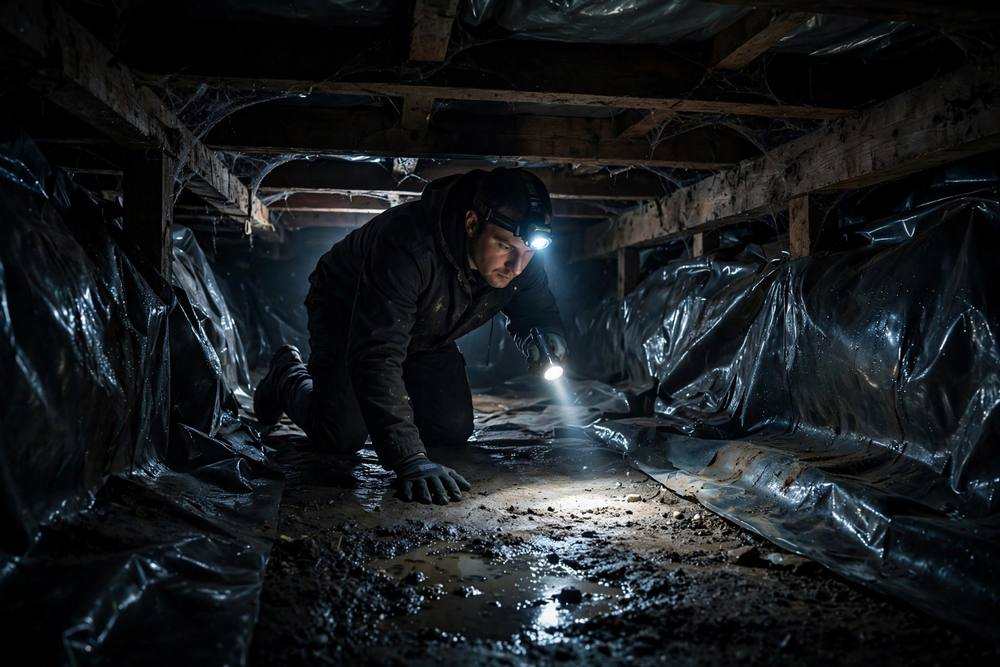
Short answer: Columbus basements seep every spring because melting snow and spring rains saturate the region's heavy clay soil, creating hydrostatic pressure that pushes water through foundation walls and the floor-wall joint. The lasting fixes are exterior drainage improvements, interior drain tile with a reliable sump pump, and sealed foundation cracks — not another round of mopping and hoping.
If your basement gets damp every March and April like clockwork, you are not unlucky — you are experiencing one of the most predictable patterns in Columbus homeownership. Understanding the mechanism is the first step to ending the annual ritual.
Why do Columbus basements leak every spring?
Three factors converge each spring. First, snowmelt plus spring rain delivers a huge volume of water in a short period — often while the ground is still partially frozen and cannot absorb it, so it runs along the surface straight to your foundation. Second, central Ohio's heavy glacial clay soil drains poorly even in good conditions; in spring it becomes fully saturated and holds water against your foundation walls for weeks. Third, the freeze-thaw cycle of winter opens hairline cracks in foundations a little wider each year, giving that pressurized water new entry points. Saturated clay plus hydrostatic pressure plus fresh cracks equals seepage — as reliable as the spring itself.
What's the difference between seepage and flooding?
Seepage is groundwater slowly pushing through foundation walls, the cove joint where wall meets floor, or cracks — typically damp spots, trickles, or puddles that appear during and after wet periods. Flooding is a larger, faster water entry: sump pump failure during a storm, surface water pouring through a window well, or a burst pipe. The distinction matters because seepage is a drainage problem solved with drainage solutions, while flooding is often an equipment or emergency problem. Many Columbus basements experience both — chronic spring seepage plus acute flooding when the sump pump gives out during the same storms causing the seepage.
What are the early warning signs?
- Efflorescence — white, chalky mineral deposits on foundation walls where water has been evaporating
- Damp spots or discoloration on walls or floor that appear after rain and slowly dry
- Musty odors that intensify each spring
- Rust on the bottom of metal storage shelving or cardboard boxes softening at the base
- Paint bubbling or peeling on basement walls
- A sump pump that runs frequently — it is handling water load, which means water is there
These signs mean water is already entering. Each wet season also feeds mold growth in wall cavities and behind finished basement walls, where you cannot see it.
What can you do right now to reduce seepage?
Before the next thaw, work through the exterior basics — they are inexpensive and genuinely effective:
- Extend downspouts at least 6 to 10 feet from the foundation; roof water dumping at the foundation is the most common aggravator of seepage.
- Fix grading: soil should slope away from the house for at least the first several feet. Low spots against the foundation collect meltwater.
- Clear snow away from the foundation as it melts, rather than letting drifts sit against the house.
- Test your sump pump and clear the discharge line — a frozen or blocked discharge line is a classic spring failure.
- Seal obvious cracks with hydraulic cement or polyurethane injection as a stopgap.
- Keep gutters clear so spring rains actually leave the roof instead of overflowing at the foundation.
When is seepage a job for professionals?
Call a professional when seepage recurs despite the basics above, when water enters through multiple locations, when you see new or widening foundation cracks, when there is any sign of structural concern (bowing walls, significant cracking, uneven floors), or when you are finishing or have finished the basement — finished walls hide seepage until mold is established. The local providers we connect you with assess where water is entering and recommend the right fix rather than a generic one: sometimes that is crack injection, sometimes interior drain tile and a sump system, sometimes exterior waterproofing. The correct answer depends on your foundation, soil, and water patterns.
How do sump pumps and drainage systems help?
These are the workhorses of dry Columbus basements. An interior French drain (drain tile) around the basement perimeter collects water entering through the cove joint and walls and channels it to a sump pit. The sump pump then ejects it far from the house. The critical details: a quality primary pump sized for your water load, a battery backup (Columbus spring storms routinely knock out power exactly when pumps are needed most), and a discharge line that runs well away from the foundation and will not freeze. Together, a drainage system and a reliable pump turn spring from seepage season into a non-event.
Do not face another spring of wet basements and musty smells. If seepage is a recurring problem — or if this spring's thaw has already left water behind — call (614) 926-0051 for 24/7 help from Columbus water damage and basement drainage professionals.
Need help right now?
One free call connects you with a trusted Columbus provider — 24/7.
Related services
- Basement Seepage Repair in Columbus, OH
- Groundwater Intrusion Cleanup in Columbus, OH
- Sump Pump Installation in Columbus, OH
Back to Columbus water damage specialists or browse all resources.
Keep reading
Common questions
Spring combines the year's heaviest groundwater load — snowmelt plus spring rains — with soil that is often still partially frozen and unable to absorb water. Central Ohio's clay soil then holds that water against your foundation for weeks, creating sustained hydrostatic pressure. In drier seasons the pressure drops below the threshold that pushes water through your foundation's weak points.
Waterproof paint and sealers can help with minor dampness on walls, but they cannot stop hydrostatic pressure pushing water through the cove joint or significant cracks — water will simply find another path or push the coating off. Think of paint as a supplement to drainage, not a substitute. Persistent seepage needs a drainage solution that relieves the pressure itself.
Pour several gallons of water into the sump pit until the float switch triggers — the pump should start promptly, discharge water, and shut off. Listen for smooth operation without grinding. Check that the discharge line is clear and runs well away from the house. Test before every spring, and consider replacing pumps older than 7 to 10 years before they fail during a storm.
Usually not. Standard homeowners policies exclude seepage and groundwater intrusion — water that comes up through the foundation over time. They do cover sudden events like sump pump failure only if you carry a sump pump overflow endorsement, which is an inexpensive add-on worth having in Columbus. Floodwater requires separate flood insurance.