
French Drains & Foundation Drainage Explained
A French drain is a gravel-filled trench with a perforated pipe that redirects groundwater away from your foundation. Here's how it works and when you need one.
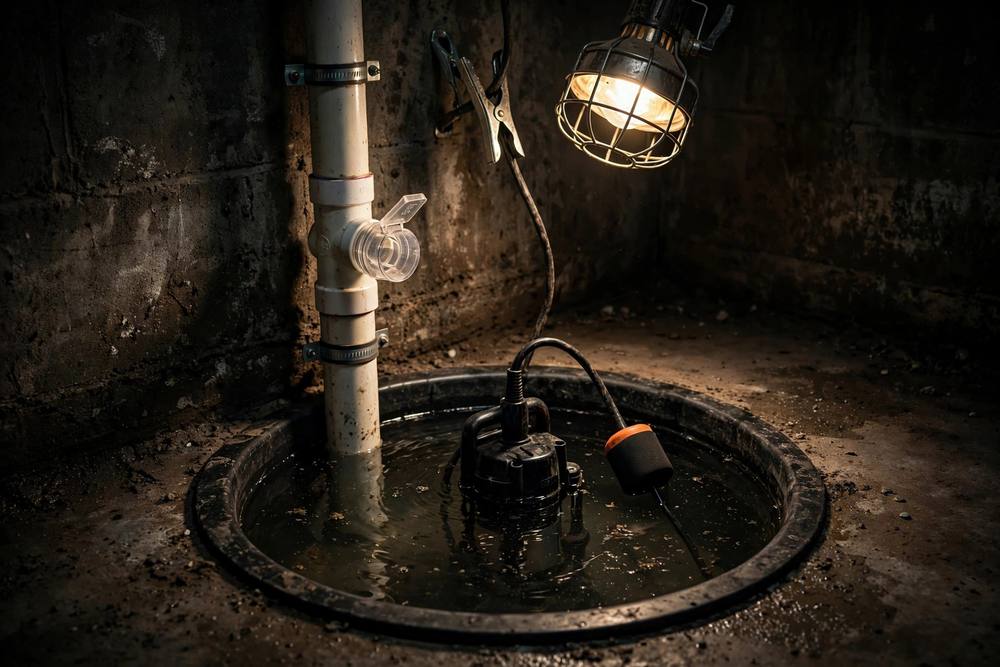
Short answer: a French drain is a sloped trench filled with gravel and a perforated pipe that collects groundwater and channels it away from your foundation to a sump pump or daylight outlet. In Columbus — where heavy clay soil holds water against basement walls — a properly installed French drain system is one of the most effective long-term defenses against basement seepage.
Many Columbus homeowners first hear the term "French drain" after their second or third basement seepage cleanup. Understanding what these systems do, and which type fits your situation, helps you invest in a fix that actually lasts instead of paying for repeated cleanups.
What is a French drain, exactly?
Despite the name, it has nothing to do with France beyond its 19th-century inventor, Henry French. A modern French drain is a trench — typically 12 to 18 inches wide — lined with filter fabric, filled with washed gravel, and containing a perforated PVC pipe laid with a slight downward slope. Groundwater flows through the gravel into the pipe's perforations, and gravity carries it to a discharge point. The filter fabric keeps soil from clogging the system. It is simple physics, no moving parts, and when installed correctly it works for decades.
How does a French drain protect a foundation?
Water damage to basements rarely comes from water pouring through a visible hole. It comes from hydrostatic pressure: groundwater saturating the soil around your foundation and pushing steadily against walls and the floor-wall joint (the "cove joint"), which is the most common seepage entry point in Columbus homes. A French drain intercepts that water before pressure builds — it gives groundwater an easier path than through your foundation. Think of it as a pressure-relief valve for the soil around your house.
What are the signs your home needs better foundation drainage?
- Water seeping at the cove joint where the basement wall meets the floor after rain
- Damp spots or efflorescence (white mineral crust) on foundation walls
- Musty basement odors that return every wet season
- Standing water in the yard near the foundation after storms
- Sump pump running constantly during and after rain — a sign of heavy water load with nowhere good to go
- Previous seepage cleanups that keep recurring in the same areas
Interior vs. exterior French drains: what's the difference?
Exterior French drains are installed around the outside of the foundation footing — the ideal solution, since they stop water before it touches the wall. But they require excavating down to the footing all around the house, which is disruptive and expensive, especially with decks, patios, or mature landscaping in the way.
Interior French drains (often called interior drain tile) are installed inside the basement, in a trench cut into the floor slab around the perimeter. They capture water that enters through the cove joint or walls and route it to a sump pump. Installation is far less disruptive — usually completed in a day or two — and for most existing Columbus homes with seepage problems, an interior system paired with a reliable sump pump is the practical, proven fix.
Why is foundation drainage such a big deal in Columbus?
Central Ohio sits on heavy glacial clay soils that drain poorly and hold water against foundations long after rain stops. That sustained hydrostatic pressure is the number one driver of basement seepage across the metro area. Add the freeze-thaw cycle — which opens hairline foundation cracks a little wider each winter — plus spring snowmelt and summer downpours, and Columbus basements face near-constant water pressure. It is no coincidence that basement waterproofing and drainage work is among the most requested services in the city. Homes in older neighborhoods with aging foundations and no original drainage system are especially vulnerable.
What does installation involve?
For an interior system, local providers we connect you with typically break out the concrete around the basement perimeter, excavate a trench, lay filter fabric, gravel, and perforated pipe pitched toward a new or existing sump pit, then re-pour the concrete. A high-quality sump pump — ideally with battery backup, since Columbus storms love to knock out power — discharges the collected water well away from the house. Most installations finish in one to three days, and the basement is usable again almost immediately. Exterior systems take longer and involve excavation equipment, waterproof membrane application to the foundation, and backfilling.
Tired of mopping up the same basement seepage every spring? A drainage assessment from a local professional can identify exactly where water is entering and which system will stop it. Call (614) 926-0051 to get connected with Columbus foundation drainage providers.
Need help right now?
One free call connects you with a trusted Columbus provider — 24/7.
Related services
- French Drain Installation in Columbus, OH
- Foundation Drainage Repair in Columbus, OH
- Basement Waterproofing in Columbus, OH
Back to water damage restoration in Columbus or browse all resources.
Keep reading
Common questions
A properly installed French drain with filter fabric, washed gravel, and solid PVC pipe can last 30 to 50 years. The most common failure mode is clogging from soil infiltration, which is why the filter fabric and proper gravel are critical — older systems installed without fabric often clog within a decade. Interior systems are also easier to service if issues arise.
A French drain dramatically reduces hydrostatic pressure and handles the vast majority of seepage, but no single measure is magic. The best results come from combining drainage with a reliable sump pump, proper exterior grading, working gutters and downspouts, and sealed foundation cracks. Together, these make a genuinely dry basement achievable.
Exterior French drains involve deep excavation around your foundation — genuinely dangerous and code-regulated work best left to professionals. Interior perimeter systems are sometimes attempted DIY, but getting the pitch, gravel spec, fabric, and sump integration right matters enormously. A poorly built drain can make things worse by concentrating water in the wrong places.
Costs vary widely based on basement size, interior versus exterior installation, soil conditions, and sump pump requirements. Rather than guessing from averages, get an on-site assessment — reputable providers inspect where water is entering and quote the specific system your home needs. Be wary of anyone quoting a price without seeing the basement.