
Documenting Water Damage for Insurance Claims
Your insurance claim is only as strong as your documentation. Here's exactly what to photograph, record, and save before, during, and after cleanup.
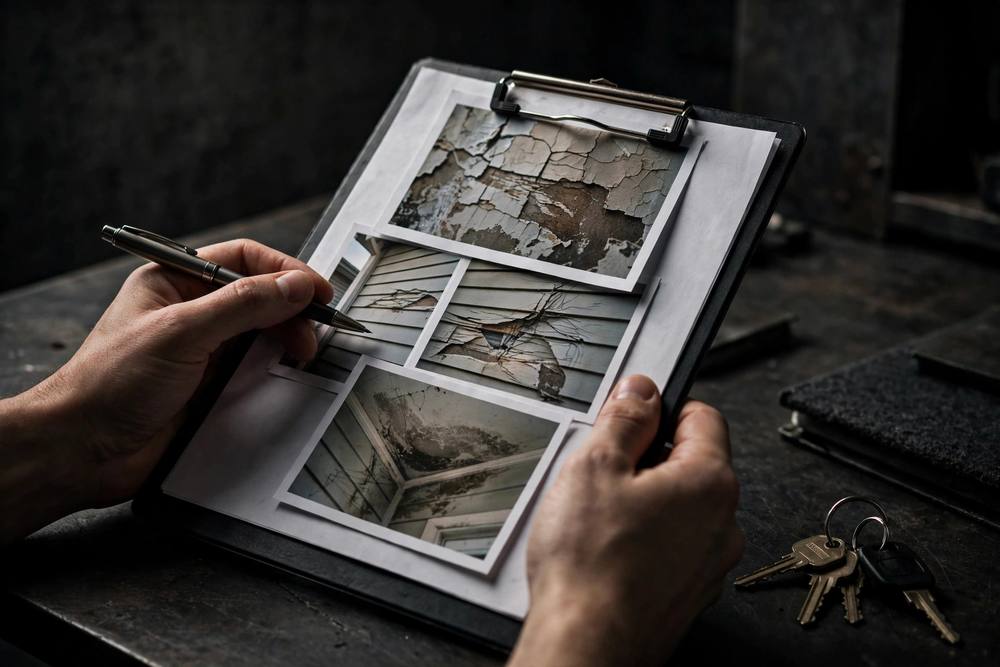
Short answer: photograph and video everything before anything is moved or cleaned, keep a written log with dates and times, save every receipt, and do not discard damaged items until the adjuster has seen them (or your insurer says otherwise). Thorough documentation is the single biggest factor separating smooth, fully-paid claims from denied or underpaid ones.
When water is pouring into your home, documentation is the last thing on your mind — which is exactly why claims suffer. Adjusters were not there; your photos and records are the entire basis of their decision. A systematic approach takes minutes and can be worth thousands of dollars.
Why does documentation make or break a claim?
Insurance covers sudden and accidental water damage — burst pipes, appliance failures, storm-driven roof leaks. It generally does not cover gradual damage from neglected maintenance or floodwater without a separate flood policy. Your documentation proves three things the adjuster needs: that the damage was sudden, the extent of what was damaged, and what it costs to put right. Without it, you are asking the insurer to take your word — and insurers are not in the business of taking anyone's word. Columbus homeowners who document well consistently report faster approvals and fuller settlements.
What should you photograph and record?
- The source: the burst pipe, failed water heater, leaking appliance, or roof damage — before anything is touched.
- Wide shots of every affected room showing water lines on walls, standing water, and the overall scene.
- Close-ups of damage: warped flooring, stained ceilings, swollen baseboards, damaged belongings — with a ruler or coin for scale where helpful.
- Video walkthroughs with narration describing what you see; video captures context photos miss.
- Damaged belongings: furniture, electronics, rugs, clothing — photograph each item, noting brand, age, and approximate value.
- Serial numbers and model plates on damaged appliances and equipment.
- Moisture readings if a restoration professional takes them — ask for copies.
Take far more photos than feels necessary. Storage is free; missing evidence is expensive.
Should you start cleanup before the adjuster arrives?
Yes — with one critical rule: document first, then mitigate. Your policy requires you to prevent further damage (failing to mitigate can reduce your payout), but it does not require you to live in standing water waiting for an adjuster. Photograph and video everything thoroughly, then begin reasonable emergency measures: shutting off water, extracting standing water, moving dry belongings to safety. Keep damaged materials — do not throw away that ruined carpet pad or swollen drywall until the adjuster has documented it or your insurer explicitly releases it. If materials must be removed for safety, photograph them extensively first and keep samples.
What paperwork should you keep?
Start a claim folder — physical or digital — and put everything in it:
- Your policy number and the adjuster's name, phone, and claim number
- A written timeline: when you discovered the damage, what you did, who you called, and when
- Every receipt: emergency plumbing, water extraction, hotel stays, meals if displaced, replacement essentials
- All contractor and restoration estimates and invoices
- Copies of every email and letter with your insurer (follow up phone calls with a confirming email)
- Receipts or records establishing the value of damaged belongings — credit card statements and photos of items in use both help
What are the most common documentation mistakes?
The big ones: cleaning up before photographing, throwing away damaged items before the adjuster sees them, failing to document the source of the water (a photo of a wet floor proves nothing about cause), not keeping receipts for emergency expenses, relying on verbal promises from adjusters instead of getting them in writing, and waiting days to file the claim. Another subtle one: documenting the obvious damage but missing the hidden kind — water inside wall cavities and under flooring. Professional moisture mapping creates a record of the full extent, which matters when the insurer questions the scope of drying and repairs.
How can a restoration professional help with your claim?
Experienced restoration providers document in the language adjusters speak: moisture maps with readings, daily drying logs, itemized scopes of work, before/during/after photo sets, and line-item estimates in standard formats. The local providers we connect you with do this routinely — it is part of professional mitigation, not an add-on. Their documentation often becomes the backbone of a successful claim, and their detailed scopes help counter lowball initial estimates. If your claim is large or complex, a public adjuster — who works for you, not the insurer — is another option worth considering.
Dealing with water damage and worried about your claim? Get professional mitigation started now — proper documentation begins the moment the pros arrive. Call (614) 926-0051 for 24/7 emergency response in Columbus.
Need help right now?
One free call connects you with a trusted Columbus provider — 24/7.
Related services
- Water Damage Documentation in Columbus, OH
- Water Damage Insurance Claim Assistance in Columbus, OH
- Flood Damage Claim Documentation in Columbus, OH
Back to water damage experts serving Columbus, OH or browse all resources.
Keep reading
Common questions
File as soon as reasonably possible — most policies require prompt notice, and delays give insurers grounds to question the claim. Call your insurer's claims line the same day you discover significant damage, even before you have all the details. You can always supplement the claim later; the initial call establishes the timeline.
Get your own detailed estimate from a reputable restoration contractor and present it with your documentation. You are entitled to negotiate — the adjuster's first number is often a starting point, not a final answer. For large disputed claims, a public adjuster or contractor experienced in insurance negotiation can help. Never sign a release or accept a final settlement until you are satisfied the scope is complete.
It can. A single water damage claim may increase premiums at renewal, and multiple claims can lead to non-renewal. This is worth weighing for small incidents — if the damage is only slightly above your deductible, paying out of pocket may be smarter long-term. For major damage, that is exactly what insurance is for.
Actual cash value (ACV) pays what your damaged property was worth used — depreciated. Replacement cost pays what it costs to buy new equivalents. Replacement cost coverage yields significantly larger settlements for belongings and finishes. Check which you have before a loss occurs; upgrading to replacement cost is usually inexpensive relative to the protection.